Your first dance, the parent dances, and hours of celebrating with everyone you love all happen in the same pair of shoes. If those shoes were chosen for looks alone, the night can turn into a barefoot retreat by the second song. This guide draws on Angela Nuran's years as a ballroom dance instructor to explain what actually makes a wedding shoe danceable, so you can move with confidence from the ceremony through the last song.
Why Dancing Shoes Are Different
Most bridal shoes are designed to be photographed, not danced in. A shoe that looks beautiful standing still can fight you the moment you pivot, step back, or spin. Dancers learn quickly that the floor asks specific things of a shoe:
- Flexibility through the ball of the foot so you can rise onto your toes and roll through each step.
- The right grip, enough traction to feel secure without gripping so hard that your foot stops and your body keeps going.
- A secure hold around the heel and midfoot so the shoe moves with you, not against you.
- Balanced weight distribution so a heel does not throw you forward onto the ball of your foot for hours.
Angela's design philosophy came directly from watching brides struggle in ordinary shoes on the dance floor. That experience shaped a simple belief we return to again and again: elegance should never come at the expense of comfort. You can read more about that in our look at Angela Nuran's most comfortable wedding shoes.
Heel Height and Stability
The most common question brides ask about dancing shoes is how high a heel they can wear. There is no single right answer, but there are reliable guidelines.
A lower or block heel gives you a wider base and more contact with the floor, which translates to stability during turns and spins. A slim stiletto can absolutely work for dancing if you are used to it, but it concentrates your weight on a tiny point, which is harder on both balance and comfort over a long night. If you rarely wear heels, a modest height you can actually walk and pivot in will serve you far better than a dramatic heel you have to think about. For a deeper look at this tradeoff, see why a low heel can be the bride's best choice.
Whatever height you choose, practice in the shoes before the wedding. Ten minutes of dancing in your living room tells you more than any product description.
The Comfort Features That Matter Most
When you evaluate a shoe for dancing, look past the finish and check for the details that keep you on your feet:
- A cushioned or pillow-top insole that absorbs impact through hours of standing and moving.
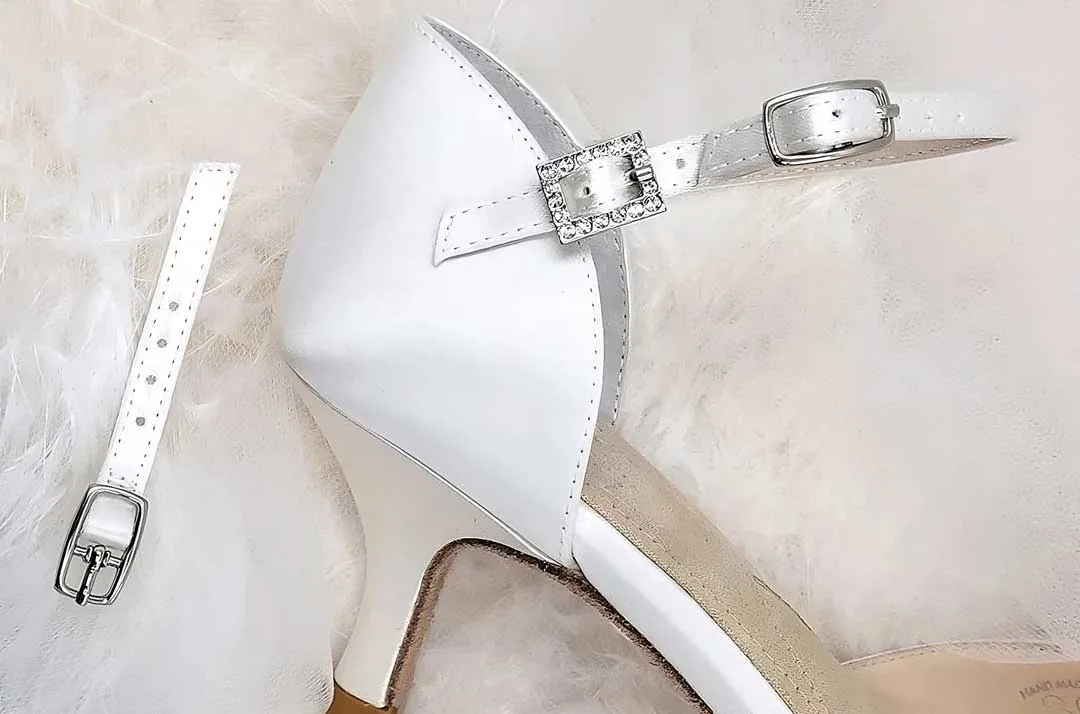
- Adjustability, such as straps or width-adjusting hardware, so the shoe adapts to your foot rather than the reverse.
- A supportive heel counter that keeps your heel from slipping with every step.
- Breathable, high-quality materials that flex with your foot instead of pinching it.
An ankle or instep strap deserves special mention. It is one of the simplest ways to add security and confidence on the dance floor, especially in an open style. Our essential guide to ankle straps covers how they work and when they help most.
Matching the Shoe to Your Venue
The floor itself changes what your shoes need to do. A polished ballroom or wooden dance floor rewards a smooth sole with just enough grip. Grass, cobblestone, or a beach ceremony calls for a lower, wider heel and often a more secure closure so you are not sinking or wobbling. If your celebration moves between spaces, choose the shoe for the surface where you will dance the most. For help thinking this through, start with which type of shoes are best for a wedding.
Breaking Them In
Even the best dancing shoes need a little preparation. Wear them around the house for short stretches in the weeks before the wedding. Dance a few songs in them on a surface similar to your venue. This softens the material where it needs to give, tells you whether you want an extra strap or cushion, and builds the muscle memory that lets you stop thinking about your feet on the day itself.
Many brides also keep a second option nearby. A comfortable flat or lower pair tucked under the sweetheart table means you can change late in the night and keep dancing without missing a moment. Our post on wedding shoes you can dance in has more on planning for the full arc of the evening.
The Bottom Line
The best wedding dancing shoes are the ones you forget you are wearing. Look for flexibility through the ball of the foot, a heel height you can genuinely move in, a secure and adjustable fit, and a cushioned insole that carries you through the night. Choose for the floor you will actually dance on, break the shoes in ahead of time, and you will spend your reception dancing with the people you love rather than counting the minutes until you can take your shoes off.
For the story behind this design philosophy, from the dance floor to the atelier, visit our story.