
Editor’s note: Erik Kreider revised this article on November 9, 2026. The original publication date is retained; Angela Nuran’s store and services have closed.
A low heel is an option to compare, not a promise of comfort. A shoe with a modest heel can still pinch, slip, or feel awkward. Start with the pairs you already wear comfortably and use them as a reference for the wedding.
Decide What You Need the Heel to Do
If you normally wear low heels, a similar height may be easier to plan around than a much taller pair. If you normally wear flats, do not assume a low heel will feel the same. Try both before committing to alterations.
Think about where you will walk. A narrow low heel can still sink into a lawn or catch between paving stones. Heel width, sole, and fastening matter alongside height. Ask the venue about the ceremony route, stairs, and dance-floor surface.
Compare Three Options
| Option | What to check | Possible compromise |
|---|---|---|
| Low block heel | Heel stays steady during turns; shoe does not slip | The shape may feel heavier than a slim heel |
| Low slim heel | Heel placement and the surfaces along your route | Soft ground and gaps between stones can be awkward |
| Flat or small wedge | Toe room, heel security, and hem clearance | A gown hem set for taller heels may need adjusting |
None is automatically the comfortable choice. Try the exact pair rather than choosing by the label alone.
Coordinate Shoes and Alterations
Bring your intended shoes to the fitting. Check the hem while standing and taking a normal step, with the salon’s permission if the gown is pinned or a sample. If you plan to change shoes, bring both pairs. A large change in heel height can change how much fabric reaches the floor.
For example, a bride planning a lawn ceremony and ballroom reception might compare a low block heel with a familiar flat. The decision should come from the fit and the gown, not from a rule that every outdoor wedding needs one style.
Indoor Try-On Checklist
- Try both shoes with the hosiery you intend to wear.
- Walk, sit, turn, and check whether your toes are crowded or your heels lift out.
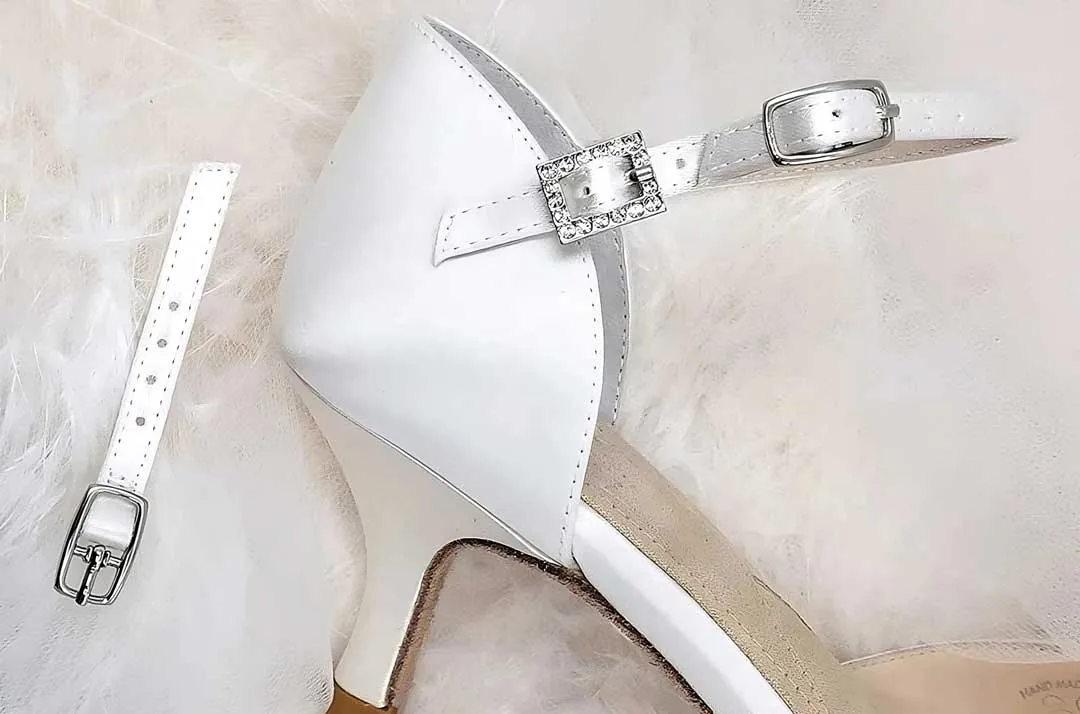
- Check the fastening without tightening it to compensate for an oversized shoe.
- Keep the soles clean while deciding and read the seller’s return conditions.
- Do not rely on stretching or accessories to rescue an uncomfortable fit.
For a broader venue-based comparison, see which type of shoes are best for a wedding. For the full outfit test, use the wedding shoe rehearsal checklist.