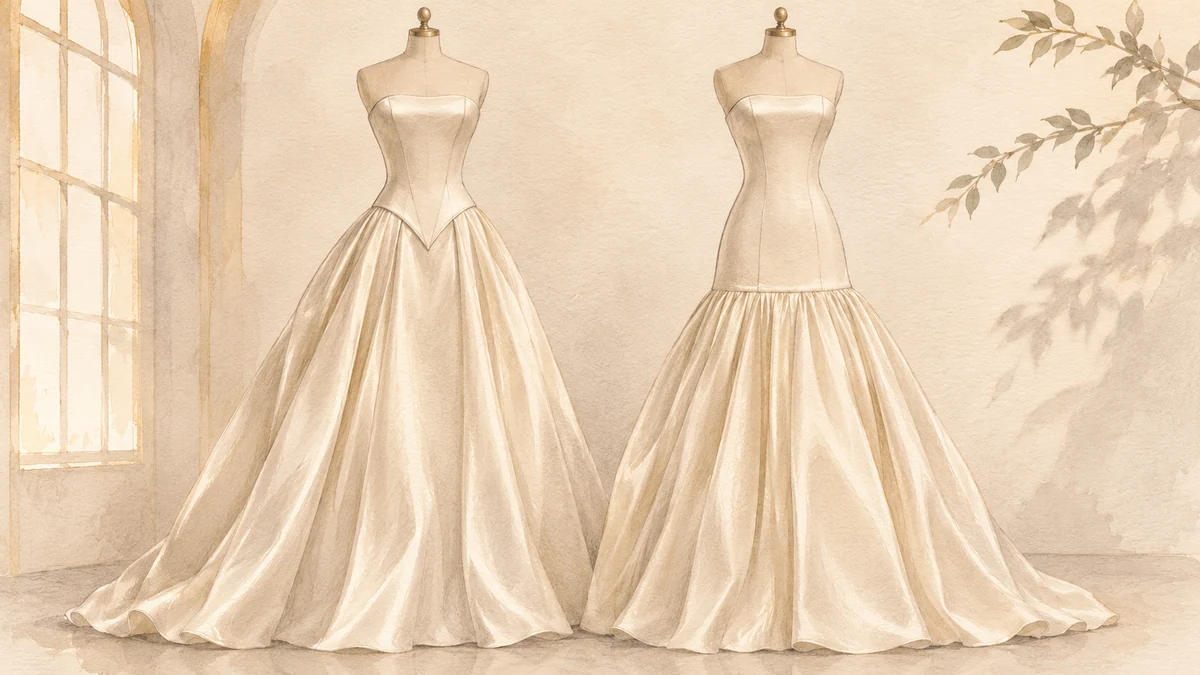
A basque waist usually dips into a point at the front of a wedding dress. A drop waist places the meeting of bodice and skirt below the natural waist. One describes the shape of that line; the other describes where it sits. A gown can have both.
That distinction makes dress shopping easier. If you love the long bodice in a photograph, asking only for a basque waist might miss what caught your eye. If you love the pointed seam, a straight dropped waist may feel quite different.
Both are appearing in current bridal collections. The useful question is which combination of waist shape, bodice length and skirt feels right when you put it on.
What Is a Basque Waist Wedding Dress?
A basque waist has a shaped lower edge to the bodice, commonly dipping into a V at the center front. The point can be restrained or dramatic, and designers also offer softer, curved interpretations.
In its November 4 introduction to the Spring 2027 collections, Maggie Sottero describes the pointed front seam and shows basque waistlines on different skirt shapes. Its Maren gown pairs that detail with a full satin skirt; Canberra uses it on a sheath. The waistline alone does not determine the rest of the silhouette.
When saving inspiration, look at the actual seam. Are you drawn to the depth of the point, the way the sides curve, or the contrast between a fitted bodice and a full skirt? Naming that detail gives your consultant something specific to work with.
What Is a Drop Waist Wedding Dress?
A dropped waist extends the bodice below your natural waist before it meets the skirt. The amount of that drop varies. It might be subtle or reach farther toward the hips.
As Essense of Australia explains in its silhouette guide, this lower placement can appear on flowing A-lines, fitted gowns and full ballgowns. A dropped waist does not automatically mean a straight, loose dress.
Pay attention to the bodice's length as well as its seam. Two dresses labeled “drop waist” may create very different proportions when one ends just below your waist and the other extends much lower.
Can a Wedding Dress Have Both?
Yes. A bodice can extend below the natural waist and finish with a pointed basque seam.
There is a clear real-world example: All Who Wander describes its Cosete gown as having a dropped basque waist. Justin Alexander Signature also lists its Rhiannon Mini in both its basque and dropped-waist collections.
Use the labels to find possibilities, then judge the individual dress. A photograph and a specific description will usually communicate more than a category name alone.
BRIDAL STYLE
Basque, drop waist, or both?
The seam shape and its position are separate details.
- 01
Basque waist
A shaped seam
A pointed front edge describes the shape where the bodice meets the skirt.
- 02
Drop waist
A lower seam
The bodice extends below the natural waist before joining the skirt.
- 03
Both together
Shaped + lowered
A lowered bodice can also end in a pointed basque seam.
A basque waist describes the shaped seam; a dropped waist describes its lower placement. These simplified illustrations show why the two can overlap.
Basque Waist vs. Drop Waist at a Glance
| Detail | Basque waist | Drop waist |
|---|---|---|
| What the term tells you | The shape of the bodice-to-skirt line | The lower position of that line |
| What to look for | A dipped or pointed front seam | A bodice extending below the natural waist |
| What still varies | Point depth, side shaping, support and skirt | Length of the drop, seam shape, support and skirt |
| Useful appointment request | “Show me a shallow point and a deeper point.” | “Show me a slight drop and a longer bodice.” |
| Can it include the other? | Yes, when the basque seam is also lowered | Yes, when the lowered seam has basque shaping |
Neither label promises a particular fit, level of comfort or amount of support. Those need to be checked in the gown itself.
Try This Three-Dress Comparison
For a useful appointment, ask to compare a dress with a natural waist, one with a shallow basque point, and one with a more noticeably dropped bodice. Keep the neckline and skirt fullness reasonably similar if the boutique has suitable samples.
This is an observation exercise, not a scoring system. It helps you separate your reaction to the waistline from your reaction to lace, sparkle or a spectacular train.
After each dress, make three brief notes:
- The detail I like: Identify something concrete, such as a curved seam or the length of the bodice.
- The detail I would change: Be specific about where the line sits or how the skirt opens.
- The question I need answered: Ask about sizing, support, movement or a proposed alteration.
You may discover that the shallow point is enough, or that you love a longer bodice only with a softer skirt. Bring those observations into the next round of gowns.
Check the Fit Where the Bodice Ends
Once you find a promising dress, ask your consultant to identify your natural waist and show where the gown's seam falls in relation to it. Then examine the front, side and back.
Notice whether the placement looks intentional to you and whether the lower edge feels comfortable. Ask which concerns come from the sample's size and which belong to the design. If the sample needs clips, have the consultant explain what you can reasonably judge before ordering.
With the consultant's permission, sit, walk, turn and raise your arms. For the full movement checklist, read Wedding Dress Comfort: Try Sitting Before You Say Yes. Keep this appointment focused on whether your preferred waistline works as part of the complete gown.
Tell the boutique about your actual plans, too. A seated dinner, stairs and an energetic first dance are useful details for the fitting conversation. Our guide to choosing wedding dancing shoes can help you think through the outfit from the floor up.
Ask About Alterations Before You Order
If you love everything except the waistline, request a specific assessment before buying. Ask whether the proposed change is offered by the designer or would require separate alterations, who will assess it, and what it would cost.
Useful questions include:
- Can this exact gown be ordered with a different bodice length or waist treatment?
- What would changing the point or seam position involve?
- Would that change affect the lace pattern, boning, skirt attachment or overall proportions?
- Can an alterations specialist assess the request before I commit?
Keep the estimate alongside your dress budget. A vague promise to “fix it later” leaves too much unanswered.
Choose the Detail You Love Wearing
Current collections give you plenty to explore, but you do not need to choose a waistline because it is prominent this season. Our 2027 wedding trends guide offers a wider view of bridal style and planning ideas.
For your dress appointment, arrive with a few images and a clear sentence: “I like this pointed seam,” or “I like how far this bodice extends.” Then allow the fitting to change your mind. The right choice is the gown whose shape you enjoy and whose fit supports the celebration you are planning.
Sources
- Maggie Sottero: Spring 2027 collections, November 4, 2026.
- Essense of Australia: wedding dress silhouettes and All Who Wander: Cosete.
- Justin Alexander Signature: basque-waist catalog and dropped-waist catalog.
Sources checked November 6, 2026. Designer collections document styles and terminology; they do not establish how many brides are buying each style.