Affiliate disclosure: This article contains a paid affiliate link. We may earn a commission if you purchase through it. As an Amazon Associate I earn from qualifying purchases.
Wedding dress comfort deserves just as much attention as how beautiful your gown looks in the mirror. There's a moment during dress shopping when everything seems to come together: the consultant arranges the train, someone hands you a bouquet, and you suddenly see the bride you've been imagining.
Then someone asks, "Is this the one?"
Before you answer, try sitting down.
It sounds almost too ordinary to mention, especially while you're standing in a beautiful gown with your favorite people watching. But your wedding won't happen entirely on a pedestal. You'll sit through dinner, lean toward someone for a hug, walk through doorways, and possibly spend part of the day squeezed into the back of a car.
A wedding dress comfort test helps you find out whether a gown works for those moments, too. It isn't about giving up the dress you love. It's about making sure you can sit, move, and celebrate comfortably while wearing it.
At Angela Nuran, comfort has always belonged in the same conversation as elegance. That applies just as much to your wedding dress as it does to your shoes.
In This Article
- Start With the Wedding You're Actually Planning
- The Wedding Dress Comfort Test Starts With Sitting
- The Breathing and Conversation Test
- The Walking and Turning Test
- The Hugging and Dancing Test
- The Undergarment Test
- The Bathroom and Transportation Test
- What to Check at Your Final Fitting
- Your Wedding Dress Comfort Checklist
Start With the Wedding You're Actually Planning
Before your appointment, think through the physical parts of your wedding day.
Will you walk across a lawn? Climb a staircase for the ceremony? Sit in a low vintage car? Dance for three hours? Wear the same gown from getting ready until the last song?
These details deserve a place beside your inspiration photographs.
Tell your consultant what you want to do comfortably. "We're having an outdoor ceremony followed by lots of dancing" is useful information. So is "I'll be seated for much of the day" or "I need to move easily with my mobility aid."
A Sample Gown Can Only Tell You So Much
A dress clipped to your back won't behave exactly like a properly fitted gown. Something that slips, bunches, or feels awkward in a sample might be different in your size.
Ask your consultant to distinguish between a sample-fit issue and a feature of the design. Can the problem reasonably be altered? Would fixing it change the neckline, silhouette, or cost?
Avoid making a purchase based on a vague promise that everything can be fixed later. Ask what the proposed solution actually involves, and have an alterations specialist assess significant changes.
The Wedding Dress Comfort Test Starts With Sitting
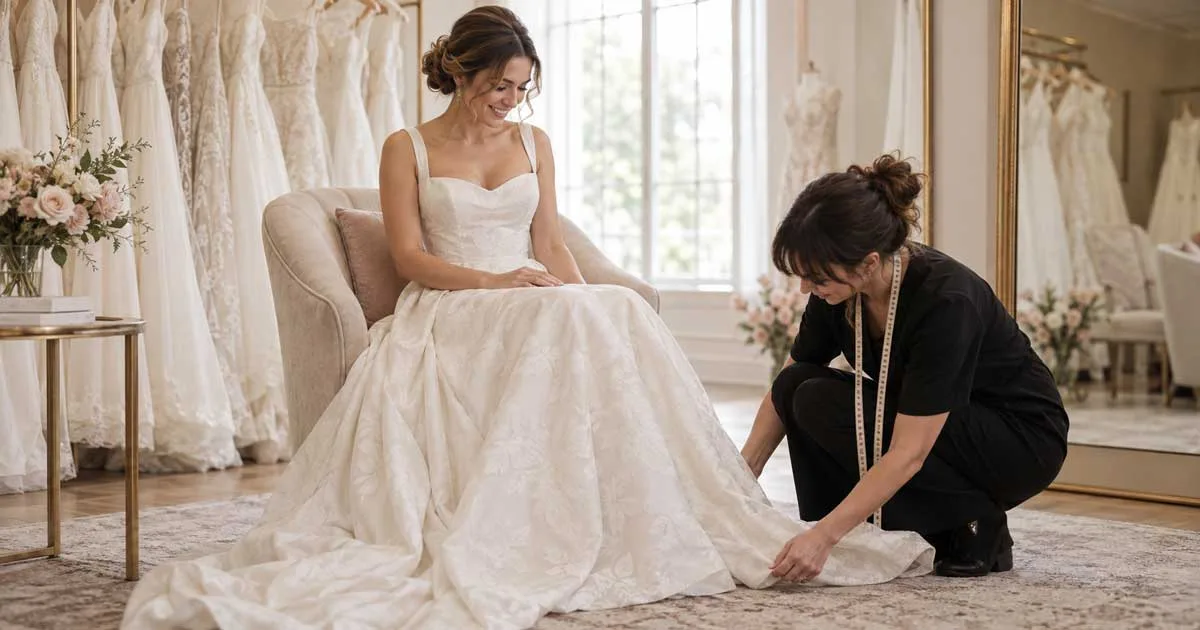
Ask whether you can sit in the gown before attempting it, especially when it's pinned or clipped. Let the consultant arrange the fabric and show you how to lower yourself without pulling on delicate seams.
Then sit as you would at your reception.
A quick perch on the edge of a chair doesn't tell you much about eating dinner. If the appointment allows, remain seated for several minutes and notice how the dress feels once the excitement settles.
Check Your Waist, Ribs, and Hips
Does the waistband press sharply into your middle? Does the bodice push upward? Does a fitted skirt pull across your thighs? Are you holding an awkward posture to make the gown bearable?
Try relaxing your shoulders and placing your feet where they would normally rest. You shouldn't have to maintain a carefully posed position throughout dinner.
If something bothers you, describe the exact location and movement. "This edge digs into my ribs when I sit" gives your alterations specialist much more to work with than "It feels strange."
Practice Standing Up Again
Getting out of the chair matters, too. Notice whether you can rise without stepping on the lining or pulling hard on the skirt.
Ask how to gather the fabric appropriately. A simple technique may solve the problem, but you'll want to learn it before your wedding rather than during your first attempt to leave the sweetheart table.
The Breathing and Conversation Test
A structured gown can feel different from everyday clothing. The important question is whether you can wear it while breathing, talking, and moving comfortably.
Have an ordinary conversation in the dress. Read a few lines aloud if that helps. Relax your stomach instead of holding it in for the mirror.
Your vows shouldn't require the same concentration as getting a stubborn suitcase closed.
Explain What "Too Tight" Means for You
Be specific about pressure, pinching, or the feeling that you can't relax. Don't accept pain or restricted breathing as a necessary part of looking bridal.
Equally, don't assume that the loosest possible bodice will be the most comfortable. You may spend the day pulling up a gown that lacks the support you need. The aim is a secure fit that works with your body.
Make room in this conversation for your own preferences. Some brides enjoy a firmly structured bodice. Others know they'll be distracted by pressure around their waist. Neither preference needs defending.
The Walking and Turning Test
Once the consultant says it's safe, step away from the mirror and walk a short distance. Turn around, come back, and try a doorway if the space allows.
Watch how naturally you move. Are you taking tiny steps because the skirt restricts your stride? Does the lining catch between your legs? Do you need both hands to keep fabric off the floor?
Wedding dress designer Essense of Australia recommends checking movement during your appointment, including walking, sitting, lifting your arms, and turning. Its guide to wedding dress silhouettes also points out that details such as boning, sleeve mobility, and where a skirt flares affect comfort.
Bring the Shoes That Will Determine Your Hem
Your shoes and dress need to work together. Kleinfeld's wedding dress fitting instructions advise bringing your intended undergarments to every fitting and your wedding shoes to the first fitting so the hem can be established.
If you plan to change into lower shoes for the reception, bring those as well. Ask your alterations specialist to assess what happens to the hem with each pair.
A dress that clears the floor in heels may drag when you switch to flats. Discovering that at a fitting gives you time to consider your options.
For help choosing shoes you can move in, read our guide to the best wedding dancing shoes.
Talk Through Stairs and Outdoor Surfaces
You don't need to take a boutique sample outside to identify potential problems. Describe your venue and ask how to manage the skirt on stairs, grass, or uneven paths.
If you'll need a free hand for a railing or mobility aid, say so. Your plan for handling the dress should accommodate that need.
The Hugging and Dancing Test
You probably won't spend your reception standing with your arms neatly at your sides. Try reaching forward, gently opening your arms, and mimicking a hug.
Pay attention to sleeves, straps, and the neckline. Does anything pinch? Does the bodice shift? Do beads or lace rub against your inner arms?
Test the Movements You Actually Enjoy
With permission, try a small side step and a gentle turn. If you've planned a first dance, mention any movement that requires extra room.
Don't attempt dramatic choreography in a pinned gown. Instead, explain it to the consultant and arrange an appropriate movement check during alterations.
Off-the-shoulder designs and fitted sleeves may have movement limits you're comfortable accepting. What matters is understanding those limits before deciding.
Ask for a Bustle Demonstration
A train that looks lovely during the ceremony needs a plan for the reception.
Ask how your particular gown will bustle, who should fasten it, and how it feels once secured. Walk and turn again with the bustle in place when your dress is ready for that check.
Bring the person who will help you on the day to a fitting if possible. With the specialist's permission, record the fastening process on your phone. A clear demonstration is easier to follow than trying to remember which tiny loop went over which button.
The Undergarment Test
Wedding dress comfort depends partly on how the whole outfit feels together, including what you wear underneath. Your undergarments should suit both the gown and your preferences, without adding pressure, irritation, or extra adjustments throughout the day.
You don't automatically need shapewear, a strapless bra, or additional layers because you're getting married. Start by asking what support the dress already provides and what, if anything, you want underneath it.
Kleinfeld's bridal undergarment guide explains how different options work with different gown designs. It also distinguishes coverage from support, which is particularly useful when considering sewn-in cups or nipple covers.
Test for Comfort and Visibility Together
Wear your intended underwear during a fitting and repeat the sitting and walking checks.
Look for rolling waistbands, leg openings that creep upward, seams that show through the fabric, and layers that make the gown feel tighter than expected.
If you like coverage between your thighs, a lightweight slipshort may be worth trying. Jockey Skimmies lightweight mid-length slipshorts, two-pack, on Amazon are one option to consider. Check the selected size and color carefully, then try them beneath your actual dress.
They aren't a requirement, and they won't suit every silhouette. A high slit, sheer panel, or low back may need a different solution. If underwear you already own feels comfortable and stays invisible, there may be nothing to buy.
Don't Introduce Something New on the Wedding Morning
Once you've found an undergarment that works, wear it for a reasonable trial under ordinary clothing before the wedding, following its care instructions.
Notice whether it becomes irritating after you sit, walk, or get warm. A fitting can reveal an immediate problem; a longer trial can tell you what happens after the first few minutes.
If you change your undergarments after your dress has been fitted, let your alterations specialist know. Check the gown again rather than assuming the fit will remain identical.
The Bathroom and Transportation Test
These questions rarely appear in wedding inspiration photographs, but they deserve answers.
How will you use the restroom in your dress? Can you manage the layers yourself? Will you need help reaching fastenings? Does your underwear make the process simpler or more complicated?
Ask your consultant for a practical approach suited to your gown. There's no single technique that works for every skirt, train, and closure.
Choose Your Helper Before You Need One
If assistance will be necessary, ask someone you feel comfortable with. Make sure that person knows the plan and won't be surprised by the assignment halfway through the reception.
Think about the venue's restroom space, too. A full skirt may be manageable in a spacious dressing area and awkward in a tiny stall.
The aim is to remove an avoidable worry, not add another elaborate item to your shopping list.
Think About Getting Into the Car
Tell your consultant if you'll travel in a low car, a tall vehicle, or anything with limited space.
Ask how to gather and position the dress without tugging on delicate areas. If a safe trial in your actual gown is practical, arrange it with appropriate help and a clean setting.
Give yourself time for this transition in the wedding schedule. Getting into a car carefully is much less stressful when nobody is announcing that you're already late.
What to Check at Your Final Fitting
Your final fitting is the time to check wedding dress comfort in the finished gown. Repeat the movements that matter to you, including sitting, walking, hugging, and dancing, and speak up about anything that still feels uncomfortable.
Bring your shoes, undergarments, and any accessories that could affect movement. A long veil or detachable sleeve deserves consideration alongside the dress.
Speak Up About Small Irritations
Notice anything that scratches or rubs, including underarm seams, neckline edges, straps, and embellishments. Explain it while the specialist can inspect the area.
Ask whether an adjustment or protective lining is appropriate. Avoid deciding that you'll solve every issue later with tape or another purchase. A fitting problem deserves a fitting conversation first.
Leave With Clear Instructions
Before you leave, know how to put on the gown, close it correctly, arrange the layers, and fasten the bustle.
Ask about carrying and hanging the dress, too. Have your helper practice any complicated fastening while someone knowledgeable can guide them.
Finally, take a few photographs or a short video if the salon permits. Look at your posture and movement as well as the dress. Do you seem relaxed, or are you constantly adjusting something?
Your Wedding Dress Comfort Checklist
Use this checklist during shopping and repeat the relevant checks during alterations. Adapt it to your body, mobility, and wedding plans.
- I can sit comfortably and stand up again.
- I can breathe naturally and speak without feeling restricted.
- I can move through the spaces I'll use on the day.
- I understand how to handle my skirt on stairs or uneven ground.
- My neckline, straps, and sleeves feel secure during ordinary movement.
- I can hug and perform the dance movements I've planned.
- My undergarments stay comfortable and work beneath the fabric.
- My hem has been checked with my intended shoes.
- I know what happens if I change into a lower pair.
- My helper and I understand the bustle and fastenings.
- I have a realistic restroom and transportation plan.
- I've discussed rubbing, pinching, or other concerns before collecting the gown.
A dress doesn't have to feel like pajamas to be the right choice. You may happily accept a little extra care in exchange for a dramatic train or a silhouette you love. But that should be an informed choice.
When you look back on your wedding, you deserve to remember the conversation over dinner, the person who held you close, and the song that brought everyone onto the dance floor.
Wedding dress comfort gives you the freedom to be present for those moments. Choose a gown that lets you enjoy the day you planned. And before you say yes, pull up a chair.